First Aid Kit Inspection and Replenishment Guide

We often promise ourselves we'll make big changes to improve our daily lives—exercising more, staying organized, or hitting new career goals. However, one resolution that is frequently overlooked is maintaining a safe workplace and home. We can never be fully prepared for the unexpected "blunders" of day-to-day life, but proper preparation makes all the difference. Whether you are managing supplies for a large facility or your own household, today is the perfect time to ensure your first aid supplies are well-stocked and up-to-date.
Guidelines for Monthly First Aid Kit Inspection and Replenishment
Many people search for the answer to a common safety question: When should a first aid kit be restocked? after each use at the end of the month during annual inspections only when the inventory is empty.
For a professional, ANSI-compliant workplace, the answer is clear: A first aid kit should be restocked after each use and checked during a routine monthly physical inspection. You should never wait until the inventory is completely empty. Instead, use the Refill Options section on our site to order only the individual items you used during the month. This keeps your kit ready without the hidden fees or overstocking issues of a route-based service.
If you are wondering how often should the contents of first aid kits be checked, it depends on the setting. While general guidelines suggest three months for home use, an ANSI/ISEA Z308.1-2021 compliant workplace cabinet requires a stricter monthly standard. A quick audit allows you to identify expired medications or low supplies before an emergency occurs.
The easiest way to maintain your supplies is through a reputable direct source. For example, MFASCO provides a visual ReStockKit system that allows you to identify missing items on your screen and add them to your cart in seconds. You can even create a custom reorder list to streamline your monthly replenishments.
Where Are First Aid Kits Needed?
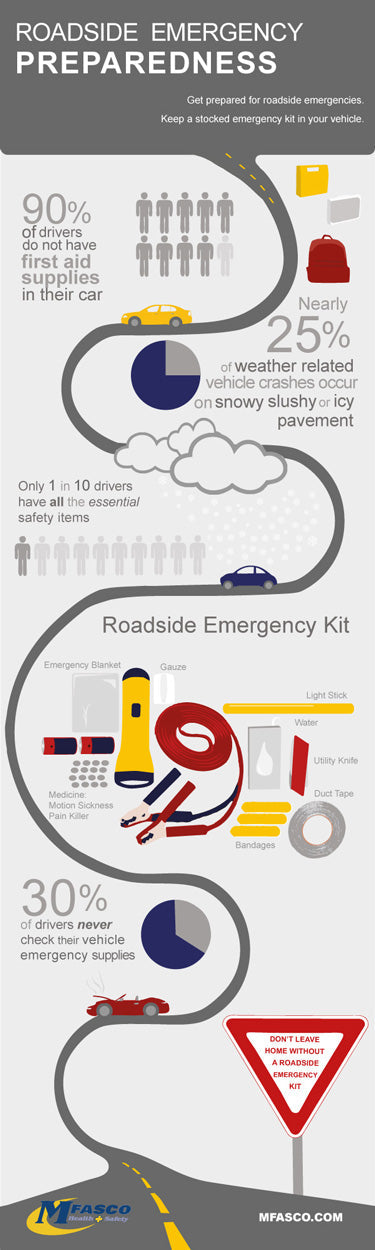
A first aid kit is an essential item to have everywhere. A comprehensive kit should always be available in schools and workplace settings, and it’s equally important to keep a kit at home and a dedicated emergency travel kit in your car. In a workplace environment, employees should feel encouraged to alert management when supplies are running low. This allows you to visit the Refill Options section of your kit's product page to top off inventory before it becomes a safety risk.
What Should Be in My ANSI-Compliant First Aid Replenishment Kit?
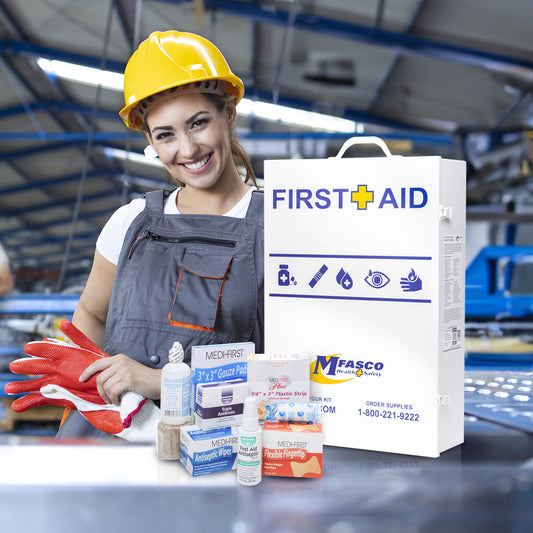
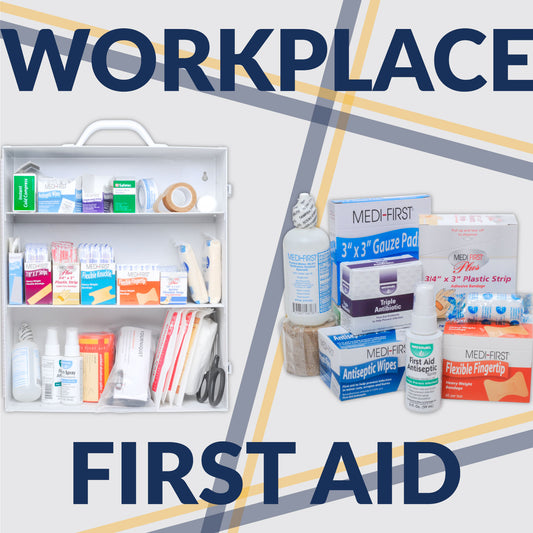
An essential first aid supply list typically includes gauze, bandages, cold packs, and disposable gloves. However, workplace kits should be individualized based on the environment. For instance, a 4-shelf industrial first aid cabinet will require a broader range of Medi-First supplies, such as burn treatment, eye wash, and specific medications, to meet Class B compliance.
If you find that your current kit no longer meets safety standards, you don't necessarily need a brand-new box. You can use Complete First Aid Kit Refill Packs to "reset" your existing cabinet. These packs provide all the contents needed for a fresh start, along with QR codes to make your future monthly inspections even easier.
Today, make a point of checking your first aid supplies, replenishing items that are expired or running low, and updating your kit to meet your current needs. Whether you are using our Make A Kit Tool to build a custom solution or simply using our Reorder Lists to top off your kit, being properly prepared is always the best choice.
Additional Resources for Your Monthly Audit:

A first aid kit should be restocked immediately after each use to ensure it is ready for the next incident. In a workplace setting, a physical audit should also be performed monthly to check for expired items and low inventory. You should never wait until the inventory is completely empty.
For home use, checking your supplies every three months is a standard guideline. However, to remain ANSI/ISEA Z308.1-2021 compliant in the workplace, first aid kits should be inspected and replenished monthly.
No. You can order individual refills for the specific items you need. If a cabinet is very old or messy, you can purchase a "Complete Refill Pack" to reset the entire container to current safety standards without buying a new metal box.
An emergency travel kit is a first aid kit kept in a vehicle to handle minor bumps, scrapes, or roadside emergencies. It should include basic bandages, trauma supplies, and diagnostic tools like a penlight or thermometer.
Using a self-managed system like ReStockKit™ allows you to stand in front of your kit and "Touch-to-Add" missing items to your cart via your phone. You can also schedule automated email reminders on any product page to alert you when it's time for your monthly inspection.
Kits should be kept in clearly marked, easily accessible locations like a nurse’s office, main desk, or breakroom. It is important to keep supplies in a cool, dry environment to prevent the medical-grade adhesives and ointments from degrading.
Contributing Expert

Mike Brinker
Mike Brinker has been working in the first aid industry for over 35 years. He has worked with thousands of businesses,groups, and organizations to provide a healthy and safe work environment. Mike helped create “Make-A-Kit”, the internet's only online first aid kit creation tool. He has also authored many helpful first-aid and safety-related resource articles found at the MFASCO Learning Center.
Top Products
-
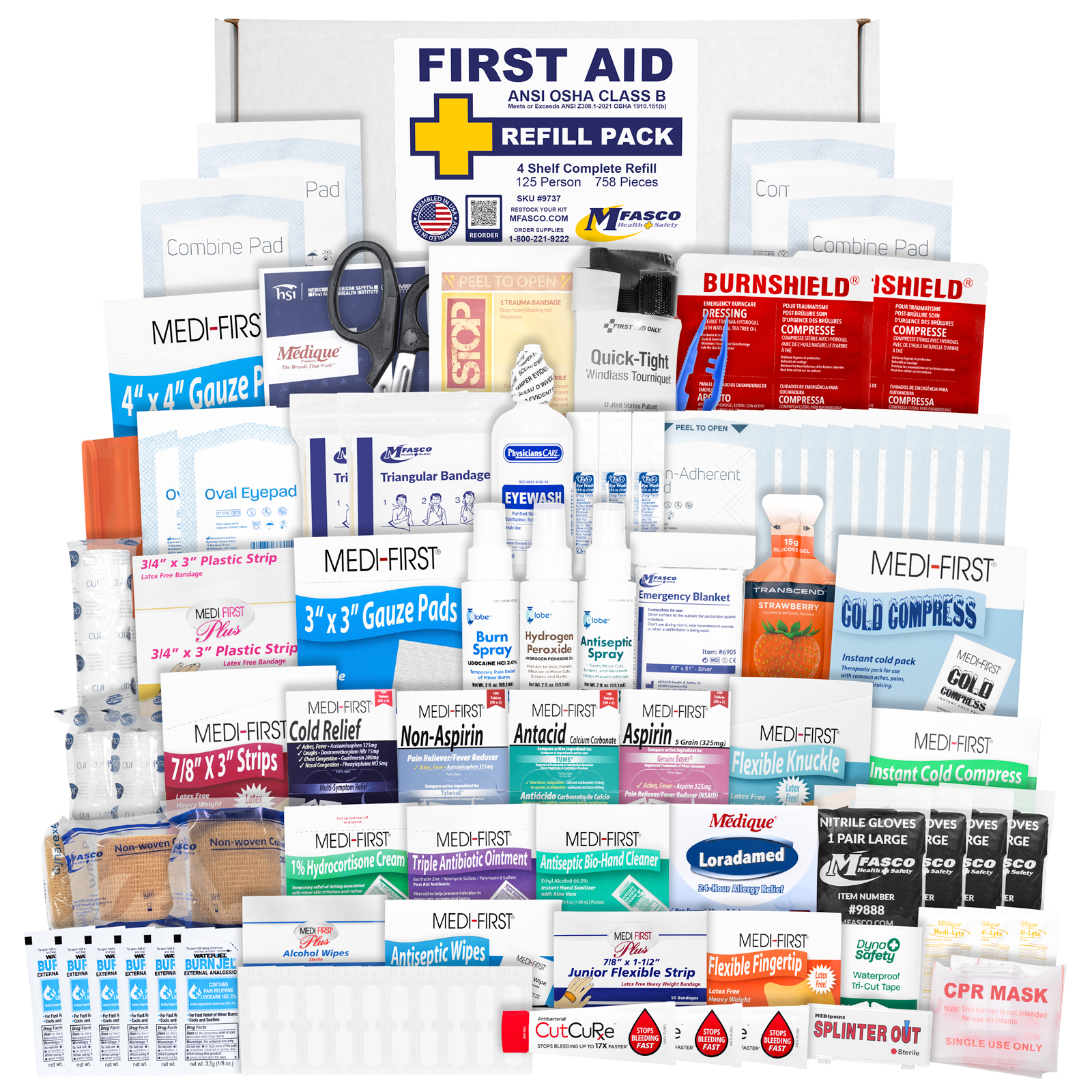
Large 4 Shelf Kit Refill With Medications 758 Piece
Out of stockRegular price $193.83Regular priceUnit price per$228.04Sale price $193.83 -
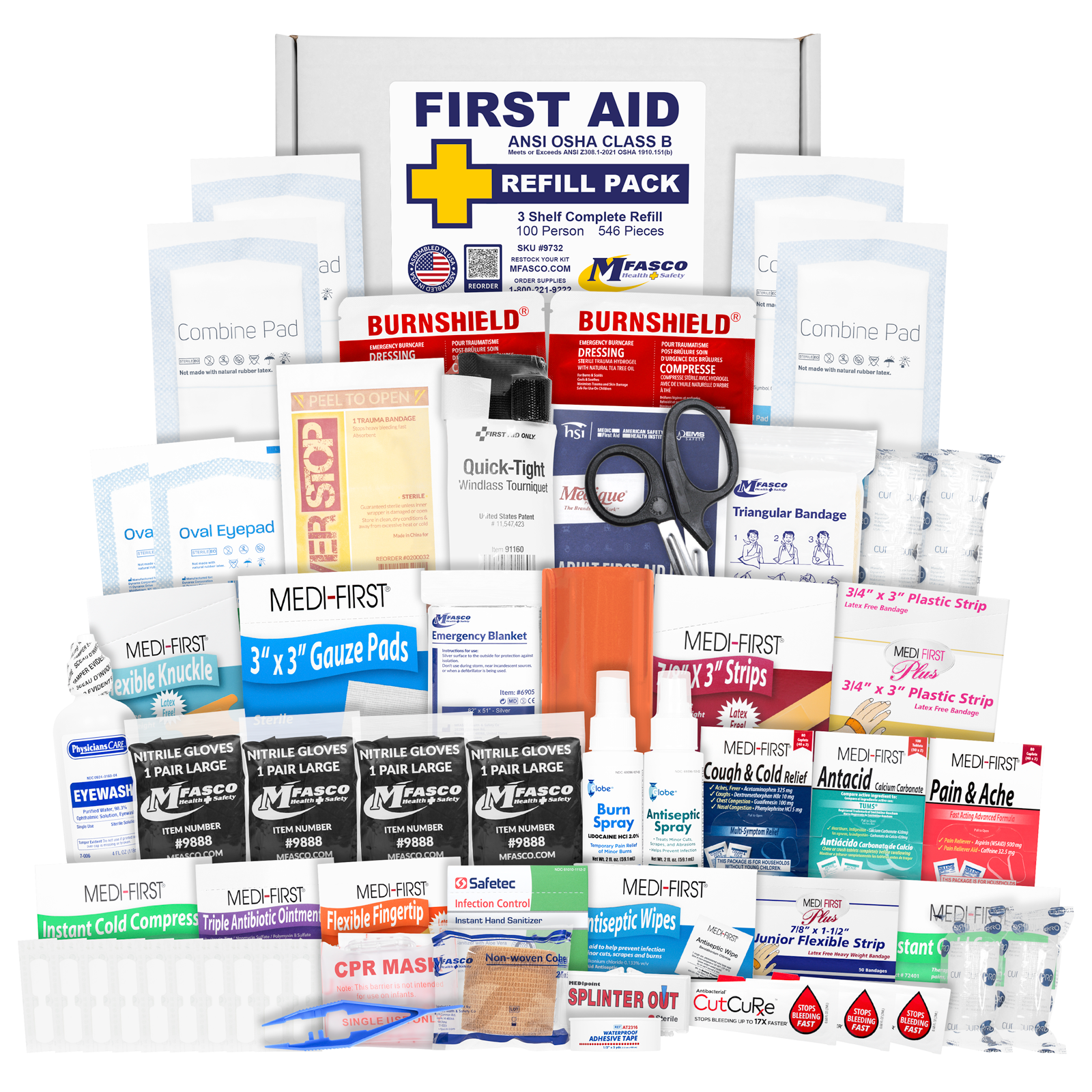
Medium 3 Shelf Workplace First Aid Kit Refill With Medications 546 Piece
Out of stockRegular price $161.88Regular priceUnit price per$190.45Sale price $161.88 -
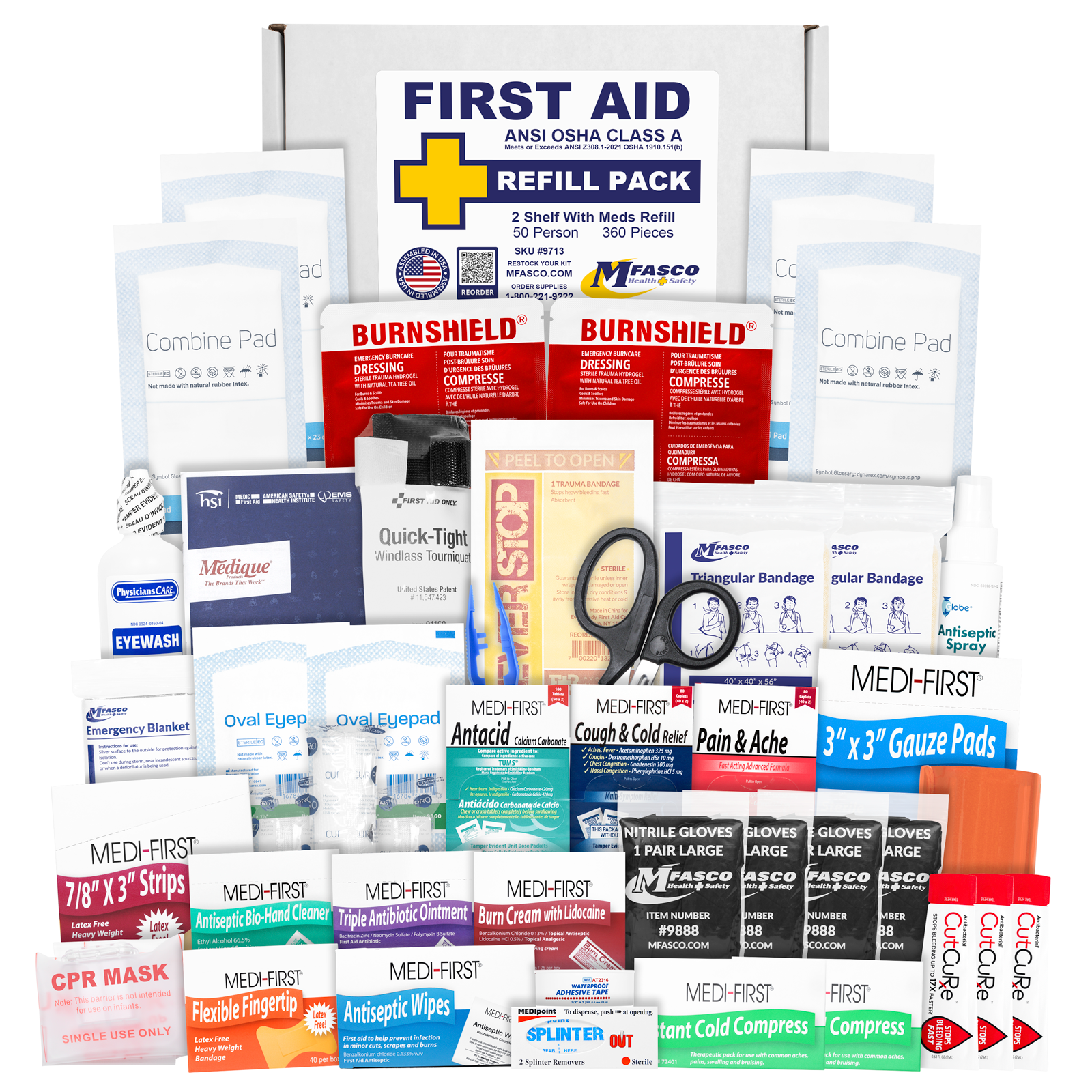
Small 2 Shelf Workplace First Aid Kit Refill With Medications 360 Piece
Out of stockRegular price $127.62Regular priceUnit price per$150.14Sale price $127.62 -
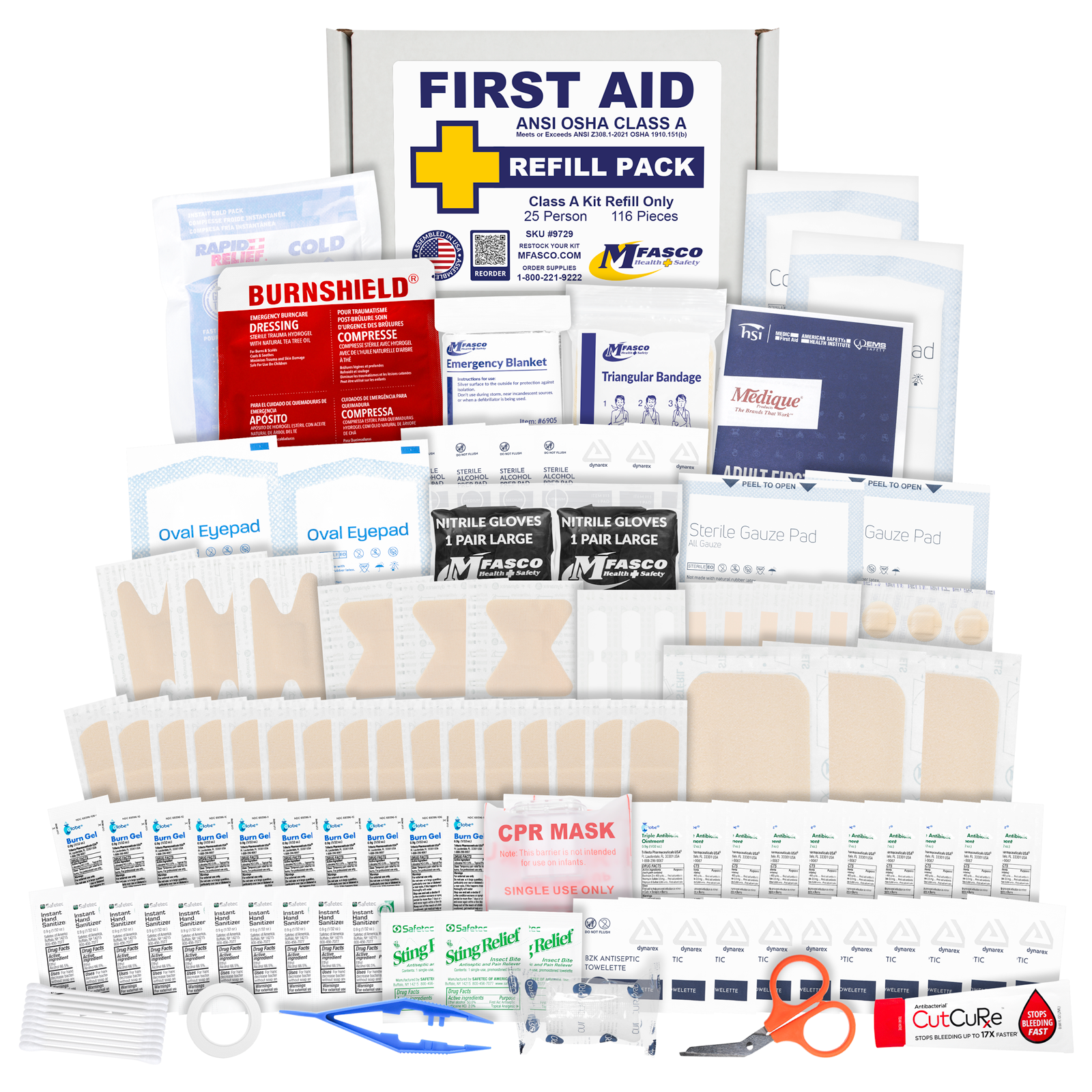
OSHA/ANSI 2021 First Aid Kit Class A Refill Only 116 Piece
Out of stockRegular price $38.68Regular priceUnit price per$45.51Sale price $38.68